
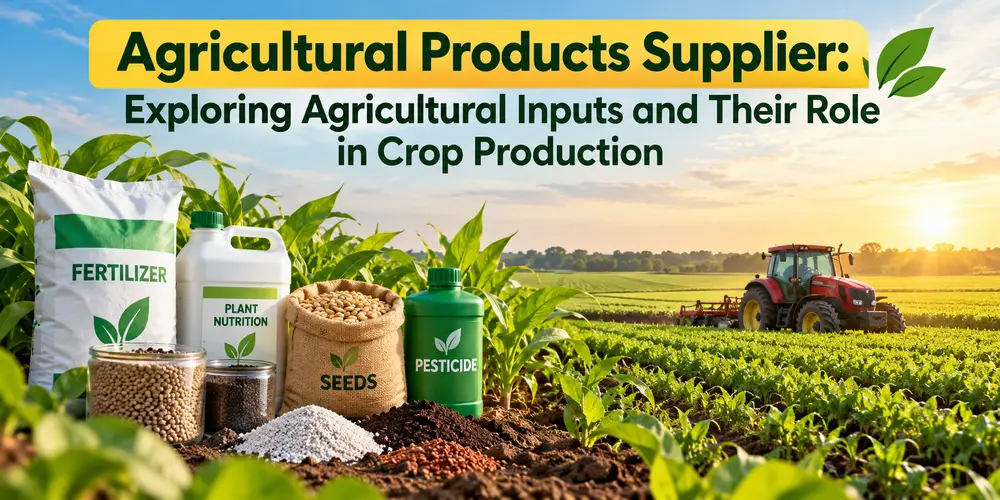
Modern farming depends on way more than just fertile soil and, you know, favorable weather. Behind a good harvest there's usually some reliable Agricultural Products Supplier that makes sure farmers, distributors, and agribusinesses stay stocked up with the seed’s fertilizers, crop protection chemicals and equipment they actually need to grow food efficiently. As global demand keeps climbing and farming practices get more specialized, the part a trusted supplier plays seems more important, like every season. From smallholder farms to those big commercial operations, agricultural inputs are basically the backbone of productivity and companies that do bulk sourcing plus supply chain solutions help connect manufacturers with end users across international markets, without too much chaos.
Understanding Agricultural Inputs
Agricultural inputs are the different materials and resources used during crop cultivation. Think seeds, fertilizers, pesticides, herbicides, fungicides, soil conditioners, and irrigation equipment. Each one has a job, like keeping crops healthy, helping them fend off disease, and supporting better yields. If farmers don't get a steady and quality-assured flow of these inputs, production can slip fast, especially in areas where the climate acts unpredictable or the soil is getting tired, depleted, and less friendly. Kinda interestingly, some companies that started out as a Household Products Supplier Netherlands have now widened their logistics reach and added warehousing for agriculture too, using their experience with bulk distribution and regulatory compliance, that kind of background.
Seeds, for example, are the “start button” for any agricultural cycle. Disease-resistant seed varieties can push yield potential higher. Fertilizers bring nutrients back, because soil slowly loses them season after season, and crop protection chemicals help keep pests, weeds and fungal infections from turning one field into a disaster. So together, these inputs are like one connected system, and they require careful sourcing storage and distribution, which is where a specialized supplier tends to add real value.
The Growing Importance of Reliable Supply Chains
Global agriculture is getting more interconnected, often with inputs produced in one place and shipped across continents. This makes supply chain reliability a huge priority for farmers and agribusinesses. If there’s delays, inconsistent quality, or worse counterfeit products, it can mean real money lost and lower crop yields, pretty directly. So it makes sense that some farming operations and distributors partner with established suppliers who also work across adjacent industries. And yeah, some of those companies that began as a Household Products Supplier Netherlands, later expanded logistics networks and warehousing capacity for agricultural needs, leaning on their bulk distribution know-how and regulatory compliance. A dependable supplier doesn’t only deliver products, they also offer technical guidance, make sure regulatory compliance is handled, and help customers select the right inputs based on soil type, local climate, and crop variety. This consultative way of working is kind of the trademark of top-tier agricultural suppliers, not just simple product resellers.
Key Categories of Agricultural Products
If you want to understand what an agricultural supplier covers, it helps to look at the main categories, not all at once, but in pieces:
Fertilizers and Soil Amendments – nitrogen phosphorus and potassium-based fertilizers, plus organic compost and micronutrient blends meant to rebuild soil fertility.
Crop Protection Chemicals – herbicides, insecticides and fungicides that protect crops from pests, weeds and diseases, so losses stay lower.
Seeds and Planting Materials – high-yield hybrid and region-specific seed varieties suited to local climate and soil conditions.
Irrigation and Farm Equipment – Tools and water systems that back more efficient water use and, you know, a more mechanized kind of farming, which ends up cutting labor costs, and also makes things more consistent, in a steady way.
Specialty Inputs – biostimulants growth regulators and soil conditioners aimed at specific agronomic issues, like drought resistance or nutrient gaps.
A well-rounded Beverage Wholesale supplier, oddly enough in this context, often keeps a broad catalog across these areas, so customers can source multiple inputs from one trusted partner instead of dealing with too many vendors at once, which tends to be exhausting.
Quality Assurance and Regulatory Compliance
Quality control is one of the biggest worries when you’re dealing with agricultural input supply. Since these products affect food safety and environmental well-being, suppliers are expected to follow tight regulatory rules, like correct labeling, safe storage, and sticking to international trade requirements. Solid suppliers typically put money into testing laboratories, certified warehousing and traceability systems, so customers can verify the origin and quality of every batch they get. Likewise, a Chemical Wholesale Supplier with deep experience in managing and moving industrial plus agricultural chemicals can bring strong safety practices and certifications, which helps protect farmers and the environment too. Those cross-industry linkages let suppliers offer more complete dependable, and yes cost-effective solutions for ag clients, rather than “random” shipments that might work, or might not, depending.
Picking the Right Agricultural Products Supplier
Choosing the right Agricultural Products Supplier is kind of a big deal, it directly touches farm productivity, cost efficiency, and the longer view sustainability plans. Farmers and agribusinesses should try to find partners who don’t only sell a wide selection of quality inputs, but also offer technical knowhow, regulatory understanding, and logistics that actually show up on time. Whether you’re sourcing fertilizers, crop protection chemicals, or some specialty agricultural inputs, teaming up with a seasoned supplier— one that also knows global distribution and those tightly connected interlinked supply chains can make a noticeable difference for consistent, high-quality harvests season after season. For companies looking for a trusted partner in agricultural inputs and broader wholesale distribution, beverageinnovationseuropewholesale.com gives the industry insights and supply chain dependability that modern farming operations need, from sourcing all the way to delivery
Frequently Asked Questions (FAQs)
1. What are agricultural inputs?
Agricultural inputs are basically those materials used in crop production, like seeds, fertilizers, pesticides, herbicides, and also irrigation equipment. They matter because they support healthy plant growth, and they help with better yield optimization too.
2. Why is choosing a reliable agricultural products supplier important?
Because a dependable supplier keeps product quality more or less steady, handles deliveries on time, and also supports regulatory compliance. It ends up affecting crop health, farm productivity and the overall profit picture in a real way.
3. What types of fertilizers do agricultural suppliers typically offer?
Most suppliers usually provide nitrogen, phosphorus, and potassium-based fertilizers. They also often offer organic compost, micronutrient mixes, and specialty soil conditioning products, for more targeted soil enrichment.
4. How do crop protection chemicals help farmers?
Crop protection chemicals, like herbicides, insecticides, and fungicides, help manage pest pressure, curb weed growth, and reduce fungal issues. Without them, yields can drop quite a lot, so it’s not minor.
5. Do agricultural suppliers offer private labeling services?
Yes, many suppliers can do private labeling and customized packaging. That way distributors and cooperatives can sell products using their own brand names, with less hassle.
6. How important is regulatory compliance in agricultural input supply?
It’s critical because it ensures product safety is properly covered, labels are correct, and import/export rules are actually followed. This also protects farmers and end consumers, at the same time.
7. Can one supplier handle both agricultural and household or chemical product distribution?
Sometimes yes. Some suppliers work across different sectors and they reuse shared logistics, warehousing, and compliance systems. So, they can serve agricultural, household, and chemical wholesale markets more efficiently, basically.
8. What should farmers consider when selecting an agricultural inputs supplier?
Farmers should check product quality, pricing, delivery reliability, technical assistance, plus the supplier’s regulatory compliance record. They might also consider sustainable sourcing approaches, if that’s a priority.