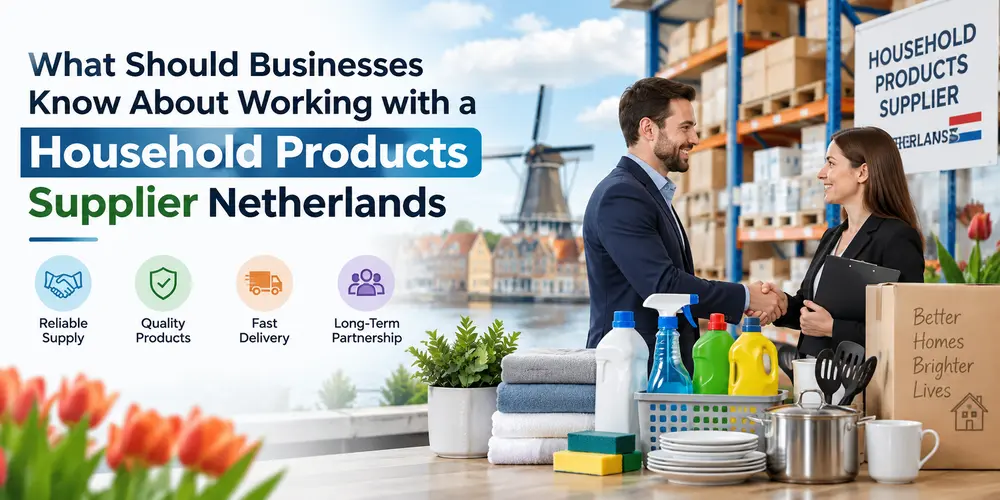
The Netherlands has long been a kind of strategic hub for European trade, mostly because of its top-notch ports, pretty slick logistics networks and that central EU position. So if you are a business and you want to source cleaning products, personal care things, and day to day essentials, working with a reliable Household Products Supplier Netherlands can really turn into a game-changer. Like, whether you’re a retailer, a distributor, or doing e-commerce, figuring out how to judge the right supplier and how to cooperate with them properly can save you loads of time, money and, yes, those annoying headaches. A lot of established suppliers also do bulk sourcing and private label packaging services, which lets you build your own branded product lines, without having to invest in manufacturing infrastructure. In this article, we’ll kind of split down the key things every business should consider before jumping into a supplier relationship in the Dutch market.
Why the Netherlands is a Hotspot for Supply Chain Partnerships
The Netherlands is not only about household goods trade it’s more like a bigger logistics powerhouse that links manufacturers with buyers across the continent. The Port of Rotterdam, which is one of the busiest ports out there, makes import and export feel smoother, so businesses can scale supply chains without going through constant shipping delays. And that same infrastructure doesn’t only help household products, it supports a bunch of other industries too, like a beverage wholesaler who wants to move drinks across Europe, while also exporting fresh produce and farming goods internationally. Because Dutch trade networks are so interconnected, businesses often find it easier to spread out sourcing across several product categories through just one regional hub, which sounds simple but it actually helps a lot.
1. Product Range and Quality Standards
Not every supplier has the same breadth of products. Some are only focused on cleaning agents, detergents while others give you a wider catalog that includes personal care items, paper goods and home maintenance products. Before signing anything, businesses should request samples, certifications, and compliance papers so you know the goods meet EU safety and environmental standards. This is extra important if you’re also dealing with a Chemical Wholesale Supplier, because chemical based household products (like disinfectants or industrial cleaners) are under strict REACH and CLP rules inside the European Union.
2. Pricing Transparency and Bulk Discounts
Cost efficiency is usually the main reason companies look abroad for suppliers but pricing transparency matters too, not just the number. A trustworthy supplier will spell out costs for bulk orders, shipping, customs handling, and any other extra fees, pretty clearly. Also ask about minimum order quantities (MOQs) and whether discounts actually increase as order volume grows, because that affects profit margins for resellers, quite directly.
3. Logistics and Delivery Reliability
Delivery timing is everything, especially if you’re managing inventory across multiple markets. Ask suppliers about their typical lead times, warehousing options, and what happens if delays show up anyway. A supplier who has strong logistics partnerships can lower the chances of stockouts, and that’s especially important during peak shopping seasons when everything gets chaotic.
4. Sustainability and Compliance
Both European customers and regulators keep pushing sustainability on and on. A lot of Dutch suppliers now supply greener packaging, biodegradable formulas, and less plastic across household product ranges. If your supplier matches these values it can help your brand reputation as well, and it might make regional environmental rules easier to satisfy, too.
5. Communication and Support
Sure, language barriers and time zones can get messy, but most established Dutch suppliers handle English business communication pretty well, and they are used to working with international clients. Try to find suppliers that provide a dedicated account manager, or a responsive customer support team, for order changes, quality issues, or shipment tracking questions. This same infrastructure benefits a wide range of industries beyond household goods, like an Agricultural Products Supplier exporting fresh produce and farming goods internationally.
Best Household Products Supplier Netherlands
Household Products Supplier Netherlands gives businesses access to a well-regulated, logistically efficient, and increasingly sustainability focused market. If you properly vet suppliers on product quality, pricing clarity, delivery reliability, and compliance standards, you can build supply chains that are cheaper and also more resilient. For companies that want trusted sourcing options, for household essentials or related categories, partnering with an established organization that also has experience in other verticals can really add value. Businesses who want a reliable partner in this space might want to check out beverageinnovationseuropewholesale.com, which provides sourcing support and distribution services for companies hoping to expand their product offerings across the European market.
Frequently Asked Questions (FAQs)
1. What kind of products does a household products supplier in the Netherlands usually provide?
Most suppliers offer cleaning agents and detergents, plus personal care goods, paper products, and everyday home upkeep items. But the exact line of products is different for each supplier.
2. How can I see if a Dutch supplier really respects EU safety standards?
First, ask for the product certificates, safety data sheets, and compliance documents that are actually linked to REACH and CLP rules before you say yes to any order. Don’t just take their word, because some info can be… a bit soft.
3. Is there sometimes a minimum order requirement when I deal with these suppliers?
Yes, quite often. Many have MOQs, and those can shift a lot depending on what product category it is and also how large the supplier is, and even their inventory style.
4. Can I source multiple product categories from one Dutch supplier network?
Usually yes. Some suppliers, or their related networks, also cover agricultural goods, drinks, or chemical products, so you can combine sourcing without running around too much.
5. How long does shipping normally take from Dutch suppliers to other EU countries?
It depends on distance and how their logistics are set up, though being in the Netherlands generally makes intra EU transport faster compared with sourcing from outside the EU, most of the time.
6. Is it cheaper to work with a Dutch supplier than a local domestic one?
It depends on where you are and your order volume. Still, many businesses think the bigger order pricing and smoother logistics help offset the international sourcing costs overall.
7. What should I check in a supplier contract?
Make sure it clearly lists the pricing, delivery timelines, quality guarantees, return conditions, and what happens if goods arrive damaged, or if there’s any disagreement about the specs.
8. Do Dutch suppliers offer sustainable or eco-friendly options?
Many do, because sustainability keeps getting more and more important in Europe. Ask about environmentally friendly packaging, and biodegradable formulations, if this matters to your brand, and try to get specifics not just marketing lines.