
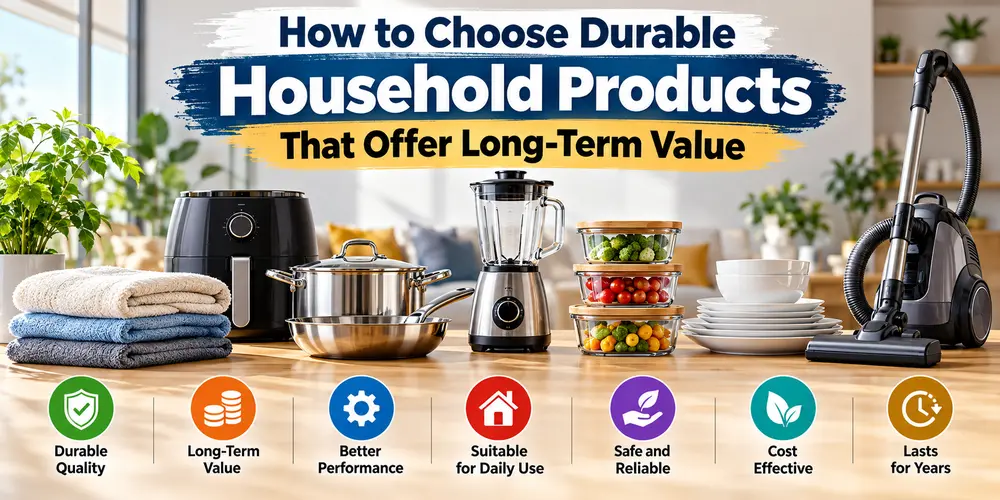
You buy a bargain-priced kitchen gadget, cleaning tool, or even a storage container, and then within a few months it cracks, fades, or just quits working. And the whole “saving” disappears the second you need to buy the replacement, right. So, choosing durable household products is one of the smarter moves for protecting your budget, cutting down waste and making everyday life a bit easier. Whether you live in a house, you run a small business, or you stock shelves as a retailer, learning how to spot quality is a skill that keeps paying off for years. And yeah, having reliable sourcing partners, like a trusted Household Products Supplier Netherlands, can make the whole thing way simpler, because you get vetted, long-lasting goods at fair prices. In this guide, we outline some practical steps for choosing household items that actually deliver long-term value, not just a flashy label.
Know the real cost (not just the sticker price)
Price tags tell only a slice. The true cost is also, how long it lasts, how often it needs replacing, and how much maintenance it drags behind it. Like, a plastic dustpan that breaks in three months ends up costing more over three years than a sturdy one that lasts a decade or so.
Before you buy, try to ask yourself:
- Wow, will I use this thing?
- What lifespan should I expect?
- Can it be repaired or refilled instead of tossed
- Will it still work well after repeated washing, heat, or heavy wear
Thinking in “cost per use” not “cost at checkout” is the real base of smart buying.
Check the materials first, seriously
Material quality is probably the biggest durability indicator you can find. Quick cheat sheet:
- Stainless steel: resists rust, heat, staining. Great for cookware, utensils, and containers.
- Tempered glass: non-porous, easy to clean, long-lasting if handled right.
- Solid wood and bamboo: strong, sustainable, if sealed properly.
- High-grade plastics (BPA-free, thick-walled): pick these over thin brittle stuff.
- Cast iron and ceramic: heavy, but they can be extremely durable with basic care.
Try to avoid items with thin coatings that peel, wobbly hinges, or that lightweight construction that bends with normal pressure. Also, pick it up. If it feels weak or hollow, chances are it is.
Look at construction and those “small” build details
Even good materials can fail if the assembly is sloppy. Take a quick look at:
- seams, joints, and handles are they really attached, not just glued
- do lids sit tightly without warping
- are screws and fasteners metal instead of plastic
- is the finish smooth and even, without sharp rough edges
Quality manufacturers pay attention to these things because durability depends on them, even when nobody is thinking about it.
Research brands and read reviews that sound human
A solid brand usually backs its products with warranties and customer support that actually responds. Search for reviews that mention long-term use, like “still working after two years” not “bought it yesterday and it’s fine.” Be wary when reviews look too perfect but don’t include any real details. Warranties matter too; they usually indicate confidence. A multi-year guarantee is a good sign. If there’s no warranty at all, you should probably look twice. Also, a reliable beverage wholesaler can sometimes supply durable drinkware, storage solutions, and packaging essentials, so it’s not only one category.
Go for multi-purpose and designs that don’t scream “trend”
Trendy items can look dated fast, while classic styles stay useful for years. Multi-purpose products bring more value because they replace several single-use pieces. Like, a good stockpot, a versatile jar set for storage, or a neutral microfibre cleaning system that can do multiple jobs, less clutter, less spending.
Pick refill options and concentrated formulas
Sustainability and durability often show up together. Refillable soap dispensers, concentrated cleaners, and reusable containers reduce packaging waste and usually lower the long-run cost per use. And when you’re sourcing cleaning and maintenance solutions in bulk, working with a dependable Chemical Wholesale Supplier helps ensure you get consistent, safe, properly labelled products for home and commercial use too.
Consider sourcing from specialized wholesalers
If you deal with high household consumption, run a small hospitality setup, or manage retail shelves, buying through wholesale channels can cut unit costs quite a lot. Wholesalers often provide better quality control, clear product specs, and bulk pricing. And the best thing is, the same supplier networks often cover multiple needs. For instance, an Agricultural Products Supplier can supply natural eco-friendly items like woven baskets, plant-based packaging, and garden tools made from sustainable materials. Building a wider supplier network usually gives you more options, and stronger negotiating power.
Test before ordering a big batch
Whether it’s for home or for a business, don’t place a huge order until you test a sample first. Check how it handles heat, moisture, weight, and actual cleaning. Run a dishwasher cycle, drop it from a reasonable height, or use it for a week straight. A few days of real-world testing can save you from expensive mistakes that you can’t really undo.
Final Thoughts
Picking durable household products is mostly about thinking in the long run. Try to look at materials, the way it is built, brand reputation, and the whole cost of ownership, not just the cheapest price tag. Start modestly, test in a careful way and then slowly move forward. Also, keep good ties with suppliers who care about quality and clarity, not the glossy promises. After some time, you usually spend less, throw away less, and you get products that actually make everyday life smoother. If you are searching for a dependable sourcing partner, beverageinnovationseuropewholesale.com links buyers with quality items and wholesale solutions across Europe. From beverage supply to household essentials, agricultural goods, and chemical products, the company helps businesses and homes make smarter, cost-focused buying choices, with reliability and long-term value in mind.
Frequently Asked Questions (FAQs)
1. How do I know if a household product is really durable?
Review the materials, construction quality, warranty coverage, and long-term customer feedback. Usually, heavier items that feel well-finished, with sturdy joints, hold up longer than lightweight, flimsy stuff
2. Is it worth paying more for durable household products?
Usually, yeah. Paying more upfront often becomes a lower cost per use because you replace the item less often, and that stuff adds up
3. What materials last the longest in household items?
Stainless steel, tempered glass, cast iron, ceramic, solid wood, and thick BPA-free plastics are often among the toughest picks
4. Why do businesses get something like household products wholesale, what’s the point really?
Well wholesale usually cuts the per item price, keeps quality more stable, and makes sure there’s steady availability. It tends to be useful for retailers, hotels, restaurants, and offices.
5. How can I find a reliable Household Products Supplier Netherlands, without getting burned?
Check for suppliers that show solid product details, collect positive customer feedback, hold proper quality certifications, and offer shipping and return terms that are plain and fair, no extra games
6. Can one supplier cover household, beverage, agricultural and chemical products too?
Sometimes yes, some wholesale platforms actually reach across multiple categories. If you work with one supplier, ordering can feel more straightforward, logistics less messy, and budget control a bit calmer
7. Are durable products better for the environment, in a practical way?
Yes, absolutely. If items last longer, there is less waste, fewer raw materials get pulled for production, and over time the carbon footprint tends to shrink
8. How should I test a product before buying in bulk?
Get a sample, then use it in normal routines: heat, washing, weight and everyday handling. After that, see how it does after a week, or even longer, before you lock in a bigger order