
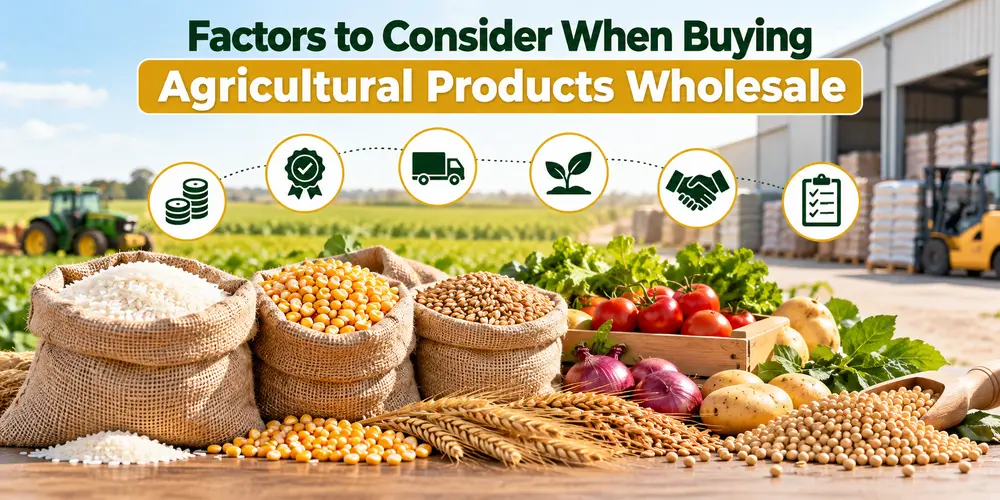
Buying in bulk is like, one of the most sensible ways to keep your margins safe, especially if you run a restaurant, retail chain, a food processing place, or some kind of distribution business, but Agricultural Products Wholesale isn’t really the same vibe as other commodities. It’s perishable, it’s seasonal, and it gets crushed by weather plus logistics, and also regulation. So, one bad sourcing choice can turn into spoiled stock, compliance headaches, or a reputation that sort of breaks. If you are thinking about buying oil online, or sourcing other farm related goods in volume, then a few key things should guide you, so you can pick well and get a dependable supply chain in place.
Factors to Consider When Buying Agricultural Products Wholesale
Quality and Grading Standards
Quality should be the top priority. Agricultural products are graded by things like size, moisture content, purity, color, ripeness, and freshness, and these grades hit both price and shelf life. Before you commit to a large order, ask the supplier how their grading works, and what it means in real life, not just on paper. Try to request samples when you can. A sample gives you a sense of aroma, texture, taste, and looks before you put in for a full container. For grains, spices, and edible oils, laboratory test results for aflatoxins, pesticide residues, and heavy metals add extra peace of mind. A dependable Agricultural Products Wholesale Supplier partner should share that documentation pretty openly, no major drama.
Certifications and Regulatory Compliance
Food safety rules are strict, and they’re even more intense if you are importing into the European Union. Find suppliers with recognised certifications like ISO 22000, HACCP, Global G.A.P., BRC, organic certification, or Fairtrade depending on what you’re actually selling. Also, paperwork matters almost as much as the product. Make sure the supplier can provide phytosanitary certificates, certificates of origin, packing lists, and customs documents. If something is missing or wrong, your shipment can sit at the port for days, which then means storage fees, and yes, more spoilage risk too.
Supplier Reliability and Reputation
A cheap price doesn’t help much if the supplier misses deadlines, or delivers quality that jumps around. Look into their track record. See how long they have been operating, ask for references from existing clients, and check independent reviews. Another useful move is choosing a supplier with a wide catalogue. A company that can handle agricultural goods alongside a beverage wholesale supplier service, for example, helps you consolidate orders, make invoicing easier, and usually cut shipping costs a bit too.
Pricing Structure and Transparency
Price is important, but you should treat it as the total landed cost, not only the per kilo or per litre number. Consider:
- Unit price and volume discounts
- Packaging and labelling fees
- Freight, insurance, and handling charges
- Import duties, plus taxes
- Payment terms and currency exchange risk
Watch out for quotes that look wildly cheaper than the market. Often those deals hide lower quality, extra charges you only notice later, or fulfillment that isn’t steady. Ask for a detailed, line by line quotation, so you can compare suppliers properly. The same logic applies if you also need a chemical products supplier for cleaning agents, fertilizers, or packaging related inputs. In most cases, one trusted partner is easier to manage than five separate ones that do not sync.
Seasonality and Supply Consistency
Agricultural output tends to follow harvest patterns, so the pricing can go a bit sideways right after the harvest. Usually it drops first, then it rises again once inventories get thinner. Once you spot those cycles, you can time your buys more wisely, or push for fixed price agreements that hold up against volatility. If your operation really needs steady year-round supply, then ask suppliers what they do about seasonality. Do they keep storage buffers, or use stratagems like sourcing from multiple regions? And if you are thinking of buying nuts online in big quantities, for instance, looking at the harvest timeline in the producing country gives you a cleaner way to plan stock, and also helps you avoid those shortages that often pop up during peak demand stretches like holiday periods when everything seems to spike at once.
Packaging, Storage, and Shelf Life
Packaging problems are a major reason products get lost. Confirm the packaging matches both the product and the transport journey: moisture resistant bags for grains, food grade drums for oils, vacuum packs or nitrogen flushed packs for nuts, and temperature-controlled containers for fresh produce. Also ask about shelf life at the time of delivery, not only at the time of production. A product with a twelve months shelf life that spends three months in transit leaves you with a shorter selling window, which matters a lot. Then evaluate your own storage ability too, including temperature, humidity, and pest control before you place a large order.
Logistics and Delivery Capabilities
Even the best product is basically useless if it arrives late, or shows up damaged. Assess the supplier’s logistics network, including their experience with cold chain handling, port relationships, and realistic delivery timelines. Clarify Incoterms like FOB, CIF, DDP and others, so both parties understand who is responsible at each step of shipping. Location can help too. Suppliers near major European trade hubs often shorten lead times. The Netherlands is a good example, since it has major ports and strong distribution infrastructure. Also, businesses that need household products wholesale Netherlands style options may benefit from partners who can group food, beverage, and non-food goods into one efficient shipment.
Final Thoughts
Agricultural Products Wholesale rewards preparation, it’s kind of a careful thing, not just clicking add to cart. By evaluating quality certifications, pricing logistics, and supplier credibility you reduce risk and you secure better long-term value. Whether you are stocking edible oils, nuts, grains, or a mixed assortment, a methodical approach pays off. If you are ready to expand your range, you can buy oil online and buy nuts online, through a trusted wholesale partner, and enjoy steady supply with simplified ordering. At beverageinnovationseuropewholesale.com, we sort of supply a broad selection of products for companies all across Europe, including agricultural goods, beverages, household essentials, and industrial supplies. As an experienced beverage wholesale supplier, a dependable chemical products supplier, and a partner for household products wholesale Netherlands buyers, we pay attention to quality compliance, and competitive pricing. Reach out today and we’ll talk through your wholesale needs, no rush.
Frequently Asked Questions (FAQs)
1. What is the minimum order quantity for wholesale agricultural products?
Minimum order quantities differ quite a bit by product and supplier. Some suppliers accept pallet-sized orders, while others want full container loads, so it’s smart to confirm that before you request a quote
2. How can I verify the quality of products before buying in bulk?
You can request samples, ask for laboratory test reports, and check the supplier’s certifications. Also starting with a small trial order is a good way to see if the consistency really stays the same.
3. Is it safe to buy oil online in wholesale quantities?
Yes, as long as you choose a verified supplier with proper certifications, transparent documentation, and food-grade packaging. Also check reviews, and request product specifications first.
4. Can I buy nut online for my retail or food business?
Absolutely. Many wholesale suppliers offer almonds, cashews, walnuts, pistachios, and more in bulk. Before you order, check shelf life, origin, and packaging.
5. What documents are required when importing agricultural products into Europe?
Typically, you will need a phytosanitary certificate, certificate of origin, commercial invoice, packing list, and bill of lading. Some products need extra health or organic certificates too.
6. How do I reduce the risk of price fluctuations?
Try fixed-price contracts, buy during harvest season when prices are lower, and diversify across multiple suppliers or origins, so it doesn’t all swing at once.
7. Can one supplier provide both agricultural and non-food products?
Yes. Many wholesalers offer a mixed catalogue, including beverages, household goods, and chemical products, which helps simplify logistics and reduce costs.
8. How long does delivery usually take?
Delivery times depend on the product origin, shipping method, and customs clearance. Inside Europe delivery may take a few days to two weeks, while overseas shipments can take several weeks, so plan ahead a bit.